


Colorectal Cancer: What You Should Know About Prevention, Symptoms, and Screening

Colorectal cancer (CRC) is the third most common cancer worldwide and affects both men and women. While it has traditionally been associated with older adults, rates among younger people are rising. In fact, about 1 in 5 new colorectal cancer diagnoses now occur in people under the age of 55. Because of this trend, awareness and early prevention are more important than ever.
How Colorectal Cancer Develops
Colorectal cancer typically begins as polyps, which are small growths that form in the colon or rectum. Most polyps are harmless at first, but some can become cancerous over time.
If a polyp becomes cancerous, it can grow deeper into the colon wall and spread to nearby blood vessels and lymph nodes, allowing cancer cells to travel to other parts of the body. This is why early detection and removal of polyps is one of the most effective ways to prevent colorectal cancer.

Common Signs and Symptoms
Colorectal cancer symptoms can vary widely, and sometimes there may be no symptoms at all, especially in the early stages. When symptoms do occur, they may include:
A change in bowel habits
Blood in or on the stool
Diarrhea or constipation
Feeling like the bowel does not empty completely
Pain, aches, or cramps in the abdomen
Low back pain
Pain that may be mistaken for menstrual cramps in people with a uterus
Unexplained weight loss
Fatigue, often related to iron-deficiency anemia
Risk Factors
Some colorectal cancer risk factors cannot be changed, while others are related to lifestyle.
Non-modifiable risk factors:
Family history of colorectal cancer
Certain genetic conditions, such as familial adenomatous polyposis (FAP)
Inflammatory bowel diseases like ulcerative colitis or Crohn’s disease
Higher risk among American Indian, Alaska Native, and African American populations
Age over 50
Modifiable lifestyle risk factors:
Smoking
Alcohol consumption
Physical inactivity
Diets low in fiber
Nutrition and Colorectal Cancer Prevention
Diet plays an important role in maintaining colon health. Research suggests several nutrition strategies may help reduce risk.
Increase fiber intake
Men: about 38 grams per day
Women: about 25 grams per day
Fiber supports gut health, helps regulate digestion, and feeds beneficial gut bacteria.
Limit red meat
Aim for less than 3 servings (1 serving = 3 oz each) per week
Include calcium and vitamin D regularly
These nutrients may play a role in protecting colon cells.
Reduce ultra-processed foods and sugar-sweetened beverages
Diets high in processed foods are associated with poorer gut health and increased chronic disease risk.
Lifestyle Habits That Help Reduce Risk
Healthy lifestyle habits support both gut health and overall well-being.
Regular physical activity
150–300 minutes of moderate activity per week or
75–150 minutes of vigorous activity per week or a combination of both
Avoid smoking and limit alcohol
There is no completely safe amount of alcohol, and reducing or eliminating intake can lower cancer risk.
Screening: The Most Powerful Prevention Tool
One of the most effective ways to prevent colorectal cancer is routine screening.
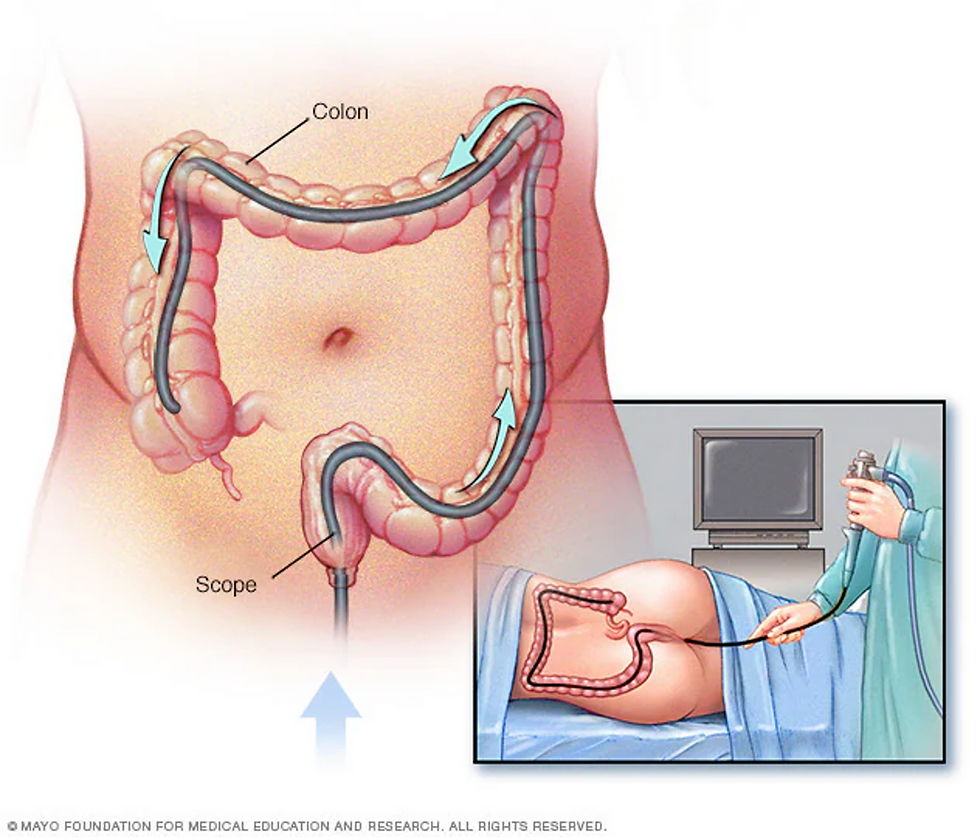
A colonoscopy is considered the gold standard screening test. During this procedure, a small camera is used to examine the entire colon and rectum for polyps or abnormal growths. If polyps are found, they can often be removed during the same procedure, preventing them from becoming cancerous.
Most adults are recommended to begin screening at age 45, though people with higher risk may need to start earlier.
The Bottom Line
Colorectal cancer is common, but it is also one of the most preventable cancers. Maintaining a balanced diet, staying physically active, avoiding smoking, limiting alcohol, and keeping up with recommended screenings can significantly reduce risk.
Most importantly, listen to your body. If something feels off—whether it’s persistent digestive changes, unexplained fatigue, or unusual pain—don’t ignore it. Early detection saves lives.
References
(1) American Cancer Society. (2024, January 29). What is colorectal cancer? https://www.cancer.org/cancer/types/colon-rectal-cancer/about/what-is-colorectal-cancer.html
(2) American Cancer Society. (2025). Colorectal cancer risk factors. https://www.cancer.org/cancer/types/colon-rectal-cancer/causes-risks-prevention/risk-factors.html
(3) American Cancer Society. (2026, January 14). Key statistics for colorectal cancer. https://www.cancer.org/cancer/types/colon-rectal-cancer/about/key-statistics.html
(4) Colon Cancer Coalition. (n.d.). Colon cancer symptoms. https://coloncancercoalition.org/colon-cancer-screening/colon-cancer-symptoms/
(5) Vallis J, Wang PP. The Role of Diet and Lifestyle in Colorectal Cancer Incidence and Survival. In: Morgado-Diaz JA, editor. Gastrointestinal Cancers [Internet]. Brisbane (AU): Exon Publications; 2022 Sep 30. Chapter 2. Available from: https://www.ncbi.nlm.nih.gov/books/NBK585999/ doi: 10.36255/exon-publications-gastrointestinal-cancers-diet-colorectal-cancer

About the Author
Jourdan Delacruz is a 2X Olympian and represented Team USA in the sport of Weightlifting at the 2020 and 2024 Olympic Games. Jourdan holds a bachelor's in nutrition and dietetics from the University of Northern Colorado and is a sports nutritionist through the ISSN. She is pursuing her master's degree in sports nutrition at Texas Tech University to become a sport-registered dietitian. Jourdan founded Herathlete, a brand committed to supporting female athletes through education and community.
Comments